Solutions

Gut Health & Digestion

A compounded peptide studied for the signaling behind gut health — gastrointestinal lining integrity — prescribed only when a licensed provider determines it is appropriate for you.

How it works.

From first intake to ongoing care — a clear path, guided by a clinician.

1

Complete your intake

Share your health history, goals, and current medications in a few minutes.

2

Meet a licensed clinician

Review your goals and options with a provider experienced in peptide therapy.

3

Receive a personalized plan

If appropriate, get a custom protocol with clear, step-by-step instructions.

4

Ongoing follow-up

Regular check-ins and adjustments keep you supported and on track.

In brief.

The gut is the only organ system most people experience as a mood. It announces itself after a course of anti-inflammatories, a stretch of bad sleep, a hard training block, or a stressful month, and it is easy to treat that as background noise rather than as a tissue doing difficult work under load.

This category is small on purpose. There is one prescription treatment here, and it is here because its research is genuinely about the gut rather than borrowed from somewhere else.

The lining is the organ

The barrier between the inside of your intestine and the rest of your body is one cell thick. That single layer of epithelium, sealed between cells by tight junctions and coated in mucus, is what stands between digesting food and your bloodstream. It replaces itself every few days, which makes it one of the most metabolically demanding tissues you own and one of the most sensitive to anything that interferes with blood supply or repair.

Plenty of ordinary things interfere. Regular NSAID use, alcohol, acute illness, and prolonged physiological stress all show up in the research on barrier integrity. When people describe their digestion as fragile, this layer is usually the tissue they are describing, even when they do not have a diagnosis attached to it.

Where BPC-157 fits in gut health

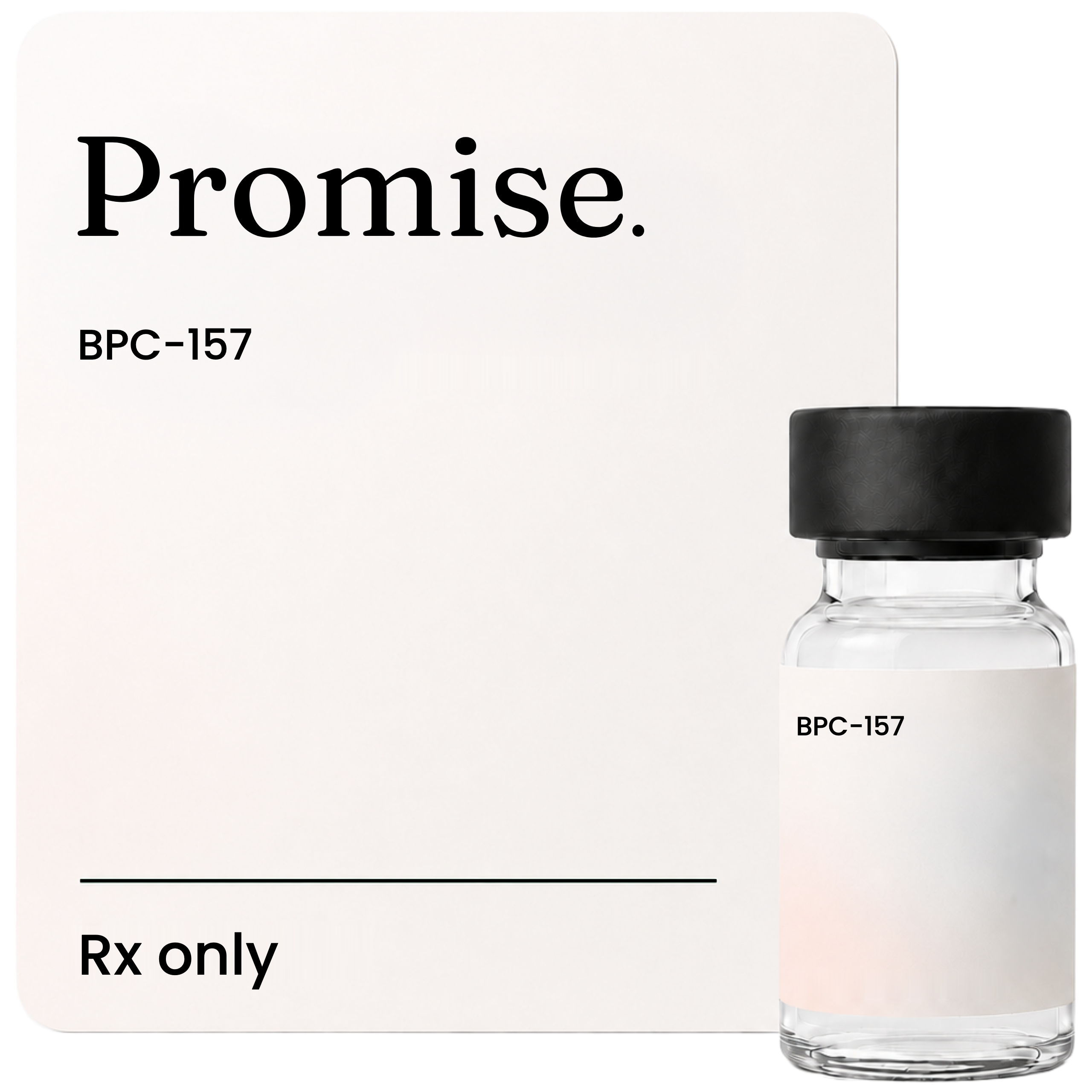
BPC-157 is a 15-amino-acid peptide modeled on a sequence found in a protective protein present in human gastric juice — a compound the body already produces in the stomach environment. That origin is the reason gastrointestinal lining integrity is its most distinctive studied property, and why it sits in this category rather than being filed under general repair.

The research has since extended to tissue repair more broadly, which is why the same peptide appears as a component of blends in muscle and recovery, including KLOW. Most of that work remains preclinical — animal models, with limited human data — and BPC-157 is not FDA-approved. A provider should be able to tell you which parts of that literature are strong and which are thin.

What this does not replace

Digestive symptoms are a diagnostic category before they are a treatment category. Blood in the stool, unexplained weight loss, persistent or worsening pain, difficulty swallowing, iron-deficiency anemia, or a change in bowel habits that will not settle are reasons to be examined, not reasons to start a peptide. Celiac disease, inflammatory bowel disease, H. pylori infection, and ulcers all have established diagnostic pathways and established treatments, and missing one of them costs real time.

A provider reviewing your intake may decline for exactly that reason and point you toward a workup instead. That is the gate doing its job.

What a visit involves

The intake for this treatment is its own clinical questionnaire: your history, your current medications — NSAID use matters here — any diagnoses you already carry, and what you are actually experiencing.

If a prescription is appropriate, the medication is compounded and dispensed by a licensed U.S. pharmacy, and shipped with dosing instructions and follow-up from your care team.

Common questions

Do I need a prescription for BPC-157?

Yes. BPC-157 is prescription-only. A licensed provider reviews every request and prescribes only when treatment is medically appropriate for you.

Is BPC-157 FDA-approved?

No. BPC-157 is not FDA-approved. It is a compounded medication, prepared for an individual patient by a state-licensed U.S. pharmacy under a provider's prescription. Compounded medications are not reviewed by the FDA for safety, effectiveness, or quality.

What is BPC-157?

A 15-amino-acid peptide modeled on a sequence found in a protective protein present in human gastric juice. Research interest centers on gastrointestinal lining integrity, and more broadly on tissue-repair signaling.

Can this replace treatment for a diagnosed digestive condition?

No, and it should not be used that way. Celiac disease, inflammatory bowel disease, ulcers, and H. pylori infection have established diagnoses and established treatments. Tell your provider about any diagnosis you carry; symptoms like bleeding, unexplained weight loss, or persistent pain need an in-person evaluation.

Why does BPC-157 also appear in recovery blends?

Because the research extended from the gut to tissue repair more generally. As a standalone treatment it is listed here; it is also a component of the Wolverine and KLOW blends under muscle and recovery.

Explore other solutions

Anti-Aging & Longevity

Compounded peptides studied in anti-aging and longevity research, offered the honest way: a licensed provider reviews your history and prescribes only when it is appropriate for you.

Explore Anti-Aging & Longevity →

Brain Health & Memory

Two brain-health peptides with an unusual research history, offered by prescription and described honestly — a licensed provider reviews every request.

Explore Brain Health & Memory →

Calming & Stress Relief

Calming & stress relief is a category of one: a compounded peptide studied around slow-wave sleep architecture and stress-hormone signaling. The human evidence is limited, and a licensed provider reviews every request.

Explore Calming & Stress Relief →

Energy & Focus

Energy & focus approached at the level of mitochondrial energy production rather than stimulation — treatments prescribed only when a licensed provider determines they are appropriate for you.

Explore Energy & Focus →

Hormone & Organ Health

Hormone & organ health starts upstream: peptides studied for their effect on the body's own growth hormone release, rather than supplying growth hormone itself. A licensed provider evaluates every request.

Explore Hormone & Organ Health →

Immune Support

Immune support here means one compounded peptide, studied around T-cell maturation and immune signaling. A licensed provider reviews every request.

Explore Immune Support →

Metabolic Support & Fat Loss

Incretin medications studied for fat loss and metabolic support, which a licensed provider may consider alongside nutrition, movement, and sleep. Every request is reviewed by a clinician.

Explore Metabolic Support & Fat Loss →

Mood & Libido

Two compounded peptides studied for the central and upstream signaling behind mood & libido, rather than peripheral blood flow. A licensed provider reviews every request.

Explore Mood & Libido →

Muscle & Recovery

Compounded peptides studied for the signaling behind tissue repair and muscle recovery — prescribed only when a licensed provider determines they are appropriate for you.

Explore Muscle & Recovery →