Solutions

Metabolic Support & Fat Loss

Incretin medications studied for fat loss and metabolic support, which a licensed provider may consider alongside nutrition, movement, and sleep. Every request is reviewed by a clinician.

How it works.

From first intake to ongoing care — a clear path, guided by a clinician.

1

Complete your intake

Share your health history, goals, and current medications in a few minutes.

2

Meet a licensed clinician

Review your goals and options with a provider experienced in peptide therapy.

3

Receive a personalized plan

If appropriate, get a custom protocol with clear, step-by-step instructions.

4

Ongoing follow-up

Regular check-ins and adjustments keep you supported and on track.

In brief.

Metabolic health is physiology before it is willpower. The medications in this category act on incretin signaling — the gut-hormone system involved in appetite regulation, how quickly the stomach empties, and how the body handles glucose and insulin after a meal. That is a clinical mechanism, not a lifestyle product, which is why these are prescription medications.

Promise offers them one way. A licensed provider reviews your health history, your current medications, and your goals, then prescribes only when treatment is appropriate for you. Sometimes the answer is no, and a no is a legitimate outcome of a medical visit.

How the two fat-loss approaches differ

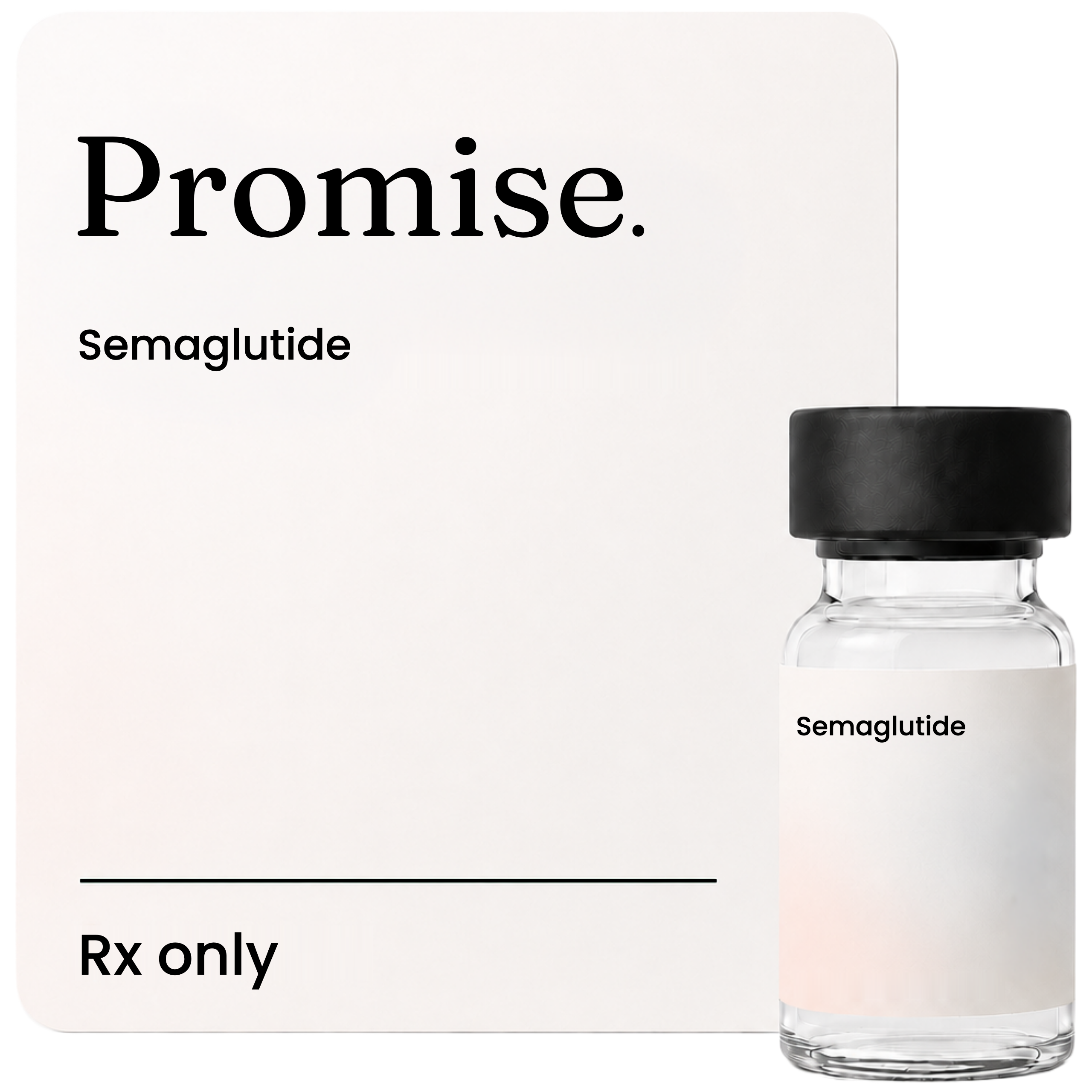
Semaglutide is a GLP-1 receptor agonist. It engages a single incretin pathway, one studied for its role in appetite signaling, gastric emptying, and glucose-dependent insulin release.

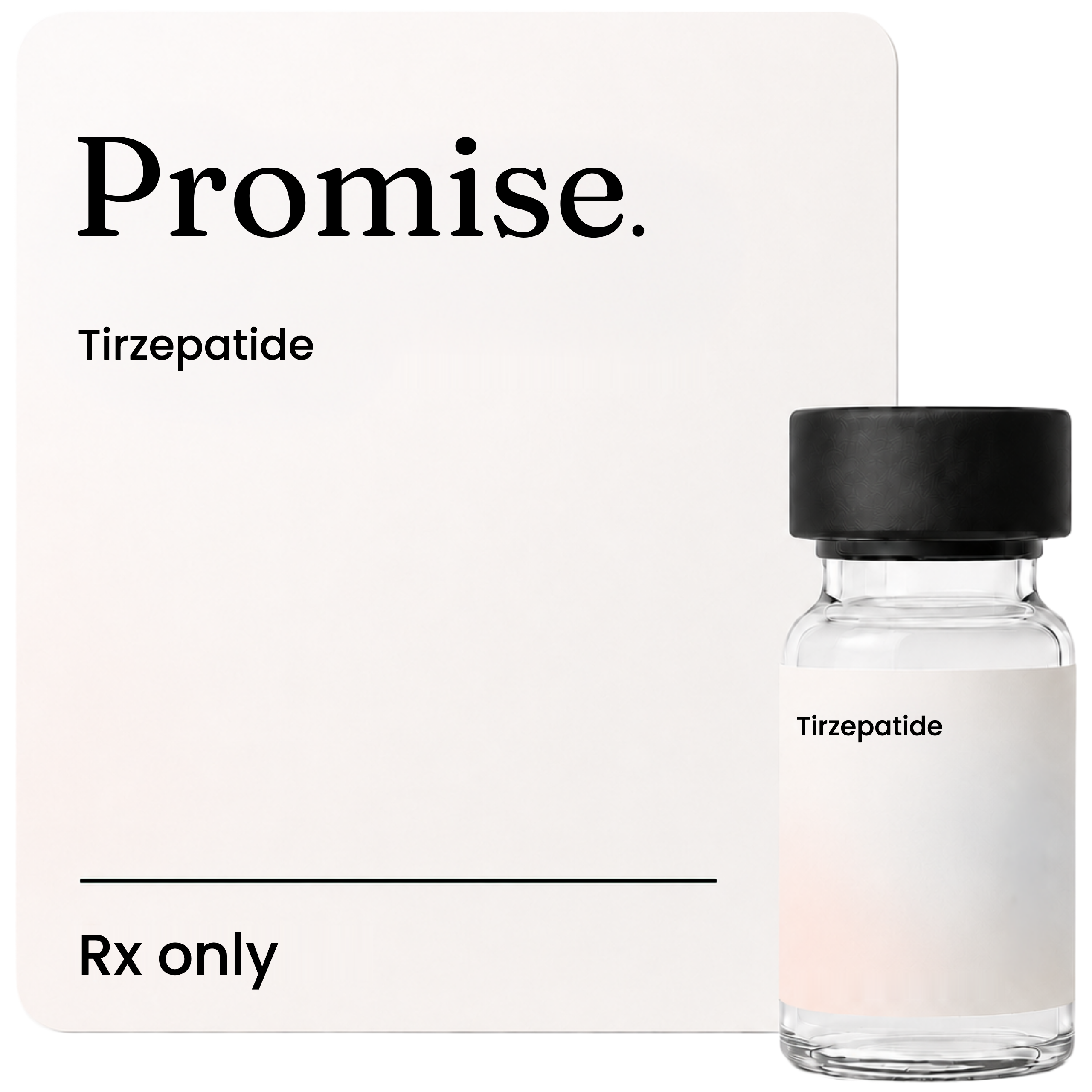
Tirzepatide engages two receptors — GLP-1 and GIP. Research interest in the dual-agonist approach centers on whether acting on both incretin pathways together produces a different metabolic response than acting on one. Both are offered here as compounded formulations combined with vitamin B12.

The distinction matters less than the marketing around it suggests. Which molecule a provider considers, if either, depends on your history, the other medications you take, how you tolerate the class, and how your response looks over time. Neither is a default.

What compounded means, plainly

It would be wrong to imply these molecules are unstudied, and equally wrong to imply the versions offered here carry a federal review they do not have. FDA-approved versions of semaglutide and tirzepatide exist. The compounded formulations offered here are not FDA-approved, and compounded medications are not reviewed by the FDA for safety, effectiveness, or quality. They are prepared for an individual patient by a state-licensed pharmacy under a prescription.

We say that up front because it is the sort of thing a person should weigh before a visit rather than discover after one. It is also why the prescriber gate is not a formality: the clinician decides.

What a visit involves

Each medication has its own clinical questionnaire — the intake for one is not the intake for the other. It covers medical and family history, current medications, any prior experience with this class, and what you are trying to change.

A licensed provider reviews the submission. If treatment is appropriate, the prescription goes to a licensed U.S. pharmacy which compounds and ships it with temperature-safe packaging and dosing instructions. Follow-up check-ins let the provider adjust, pause, or stop the plan as your response becomes clear.

How a provider decides

Providers weigh personal and family medical history, current medications, and any condition that makes this class inappropriate. Some histories take it off the table entirely, regardless of what a person is hoping for. Dosing generally starts low and moves slowly, because tolerability is part of the assessment rather than an afterthought.

Medication in this category is meant to sit alongside nutrition, movement, and sleep, not to replace them. If hormone signaling is part of your broader picture, hormone and organ health covers a different axis entirely. Either way the work stays yours — the medicine is only there to help you keep the promise you already made.

Common questions

Do I need a prescription for semaglutide or tirzepatide?

Yes. Both are prescription medications. Every request on Promise is reviewed by a licensed provider, who prescribes only when treatment is medically appropriate for you and may decline. Not everyone qualifies.

Is compounded semaglutide or tirzepatide FDA-approved?

No. FDA-approved versions of these molecules exist, but the compounded formulations offered here are not FDA-approved. Compounded medications are not reviewed by the FDA for safety, effectiveness, or quality; they are prepared for an individual patient by a state-licensed pharmacy under a prescription.

What is the difference between the two medications?

Semaglutide acts on the GLP-1 receptor. Tirzepatide acts on GLP-1 and GIP receptors together. Which one a provider considers, if either, depends on your health history, other medications, tolerability, and how you respond over time.

Why is B12 included in the formulation?

Both medications are offered here as compounded formulations combined with vitamin B12. Your provider can explain how that applies to your situation during review, and will tell you if the combination is not appropriate for you.

What happens after I submit an intake form?

A licensed provider reviews your health history and goals. If treatment is appropriate, the prescription is sent to a licensed U.S. pharmacy and shipped to you with dosing instructions. If it is not appropriate, the provider declines the request.

Explore other solutions

Anti-Aging & Longevity

Compounded peptides studied in anti-aging and longevity research, offered the honest way: a licensed provider reviews your history and prescribes only when it is appropriate for you.

Explore Anti-Aging & Longevity →

Brain Health & Memory

Two brain-health peptides with an unusual research history, offered by prescription and described honestly — a licensed provider reviews every request.

Explore Brain Health & Memory →

Calming & Stress Relief

Calming & stress relief is a category of one: a compounded peptide studied around slow-wave sleep architecture and stress-hormone signaling. The human evidence is limited, and a licensed provider reviews every request.

Explore Calming & Stress Relief →

Energy & Focus

Energy & focus approached at the level of mitochondrial energy production rather than stimulation — treatments prescribed only when a licensed provider determines they are appropriate for you.

Explore Energy & Focus →

Gut Health & Digestion

A compounded peptide studied for the signaling behind gut health — gastrointestinal lining integrity — prescribed only when a licensed provider determines it is appropriate for you.

Explore Gut Health & Digestion →

Hormone & Organ Health

Hormone & organ health starts upstream: peptides studied for their effect on the body's own growth hormone release, rather than supplying growth hormone itself. A licensed provider evaluates every request.

Explore Hormone & Organ Health →

Immune Support

Immune support here means one compounded peptide, studied around T-cell maturation and immune signaling. A licensed provider reviews every request.

Explore Immune Support →

Mood & Libido

Two compounded peptides studied for the central and upstream signaling behind mood & libido, rather than peripheral blood flow. A licensed provider reviews every request.

Explore Mood & Libido →

Muscle & Recovery

Compounded peptides studied for the signaling behind tissue repair and muscle recovery — prescribed only when a licensed provider determines they are appropriate for you.

Explore Muscle & Recovery →