Solutions

Muscle & Recovery

Compounded peptides studied for the signaling behind tissue repair and muscle recovery — prescribed only when a licensed provider determines they are appropriate for you.

How it works.

From first intake to ongoing care — a clear path, guided by a clinician.

1

Complete your intake

Share your health history, goals, and current medications in a few minutes.

2

Meet a licensed clinician

Review your goals and options with a provider experienced in peptide therapy.

3

Receive a personalized plan

If appropriate, get a custom protocol with clear, step-by-step instructions.

4

Ongoing follow-up

Regular check-ins and adjustments keep you supported and on track.

In brief.

Most people who look at this category are not trying to train harder. They are trying to recover well enough to keep training at all — after a strain that has outlasted its welcome, a joint that complains for a week after every session, or simply the discovery that the body repairs more slowly at forty-five than it did at twenty-five.

Recovery is the real constraint in almost every training plan. The compounds here are studied for the signaling the body uses when it repairs itself, and every one of them is a prescription medication: a licensed provider reviews each request and prescribes only when it is appropriate.

What these recovery peptides act on

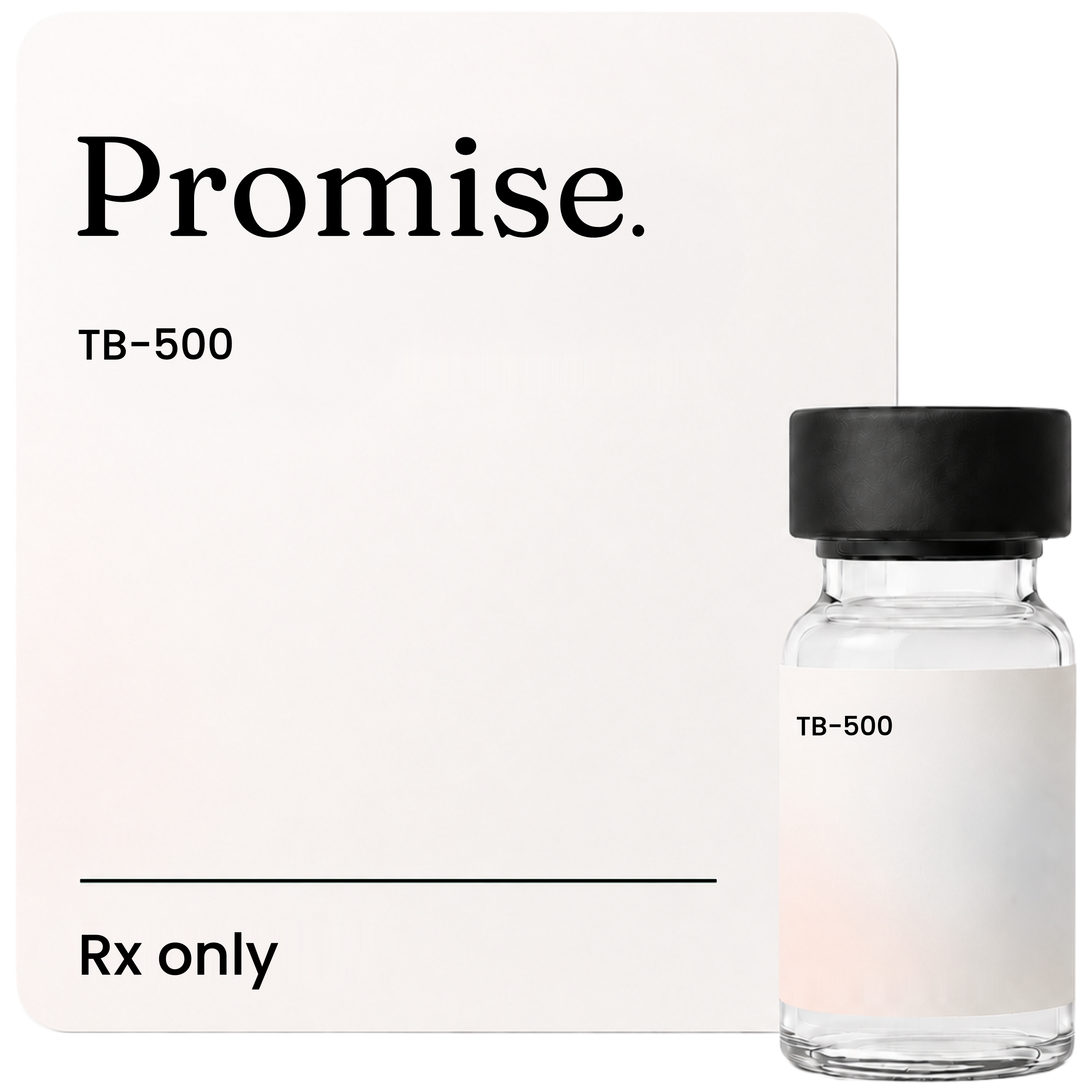
TB-500 is a synthetic fragment of thymosin beta-4, a protein present in nearly every human cell. Its most studied property is actin binding — actin being the structural protein cells use to change shape and move. That connects it to cell migration, new blood-vessel formation, and the early phase of tissue repair, which is where most of the research interest sits.

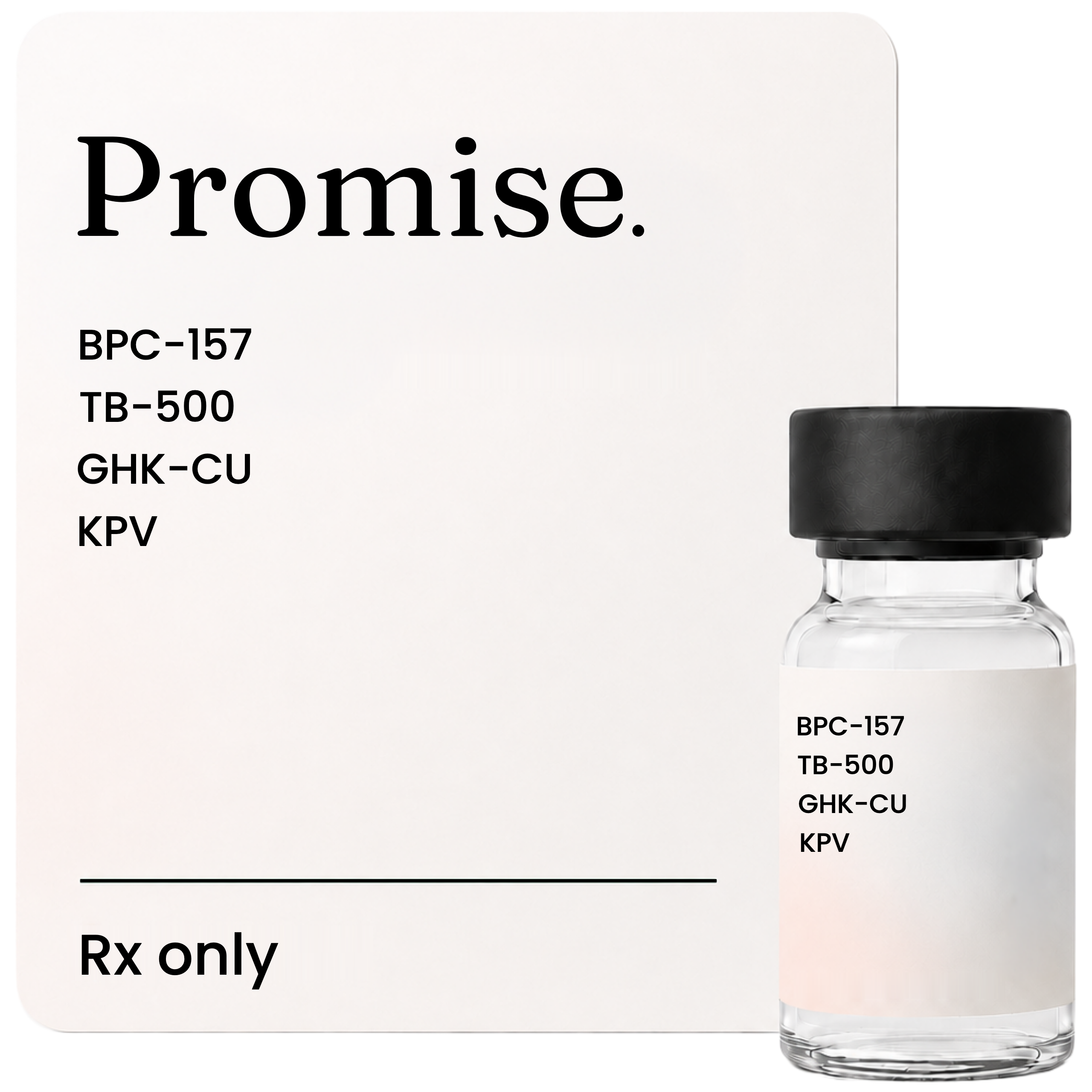
The blends add other signals to that one. KLOW brings in KPV, a fragment studied around inflammatory signaling, and GHK-Cu, a copper-binding peptide studied around skin and connective tissue. The premise of a blend is coverage across several repair pathways at once rather than depth in one.

One peptide or a blend

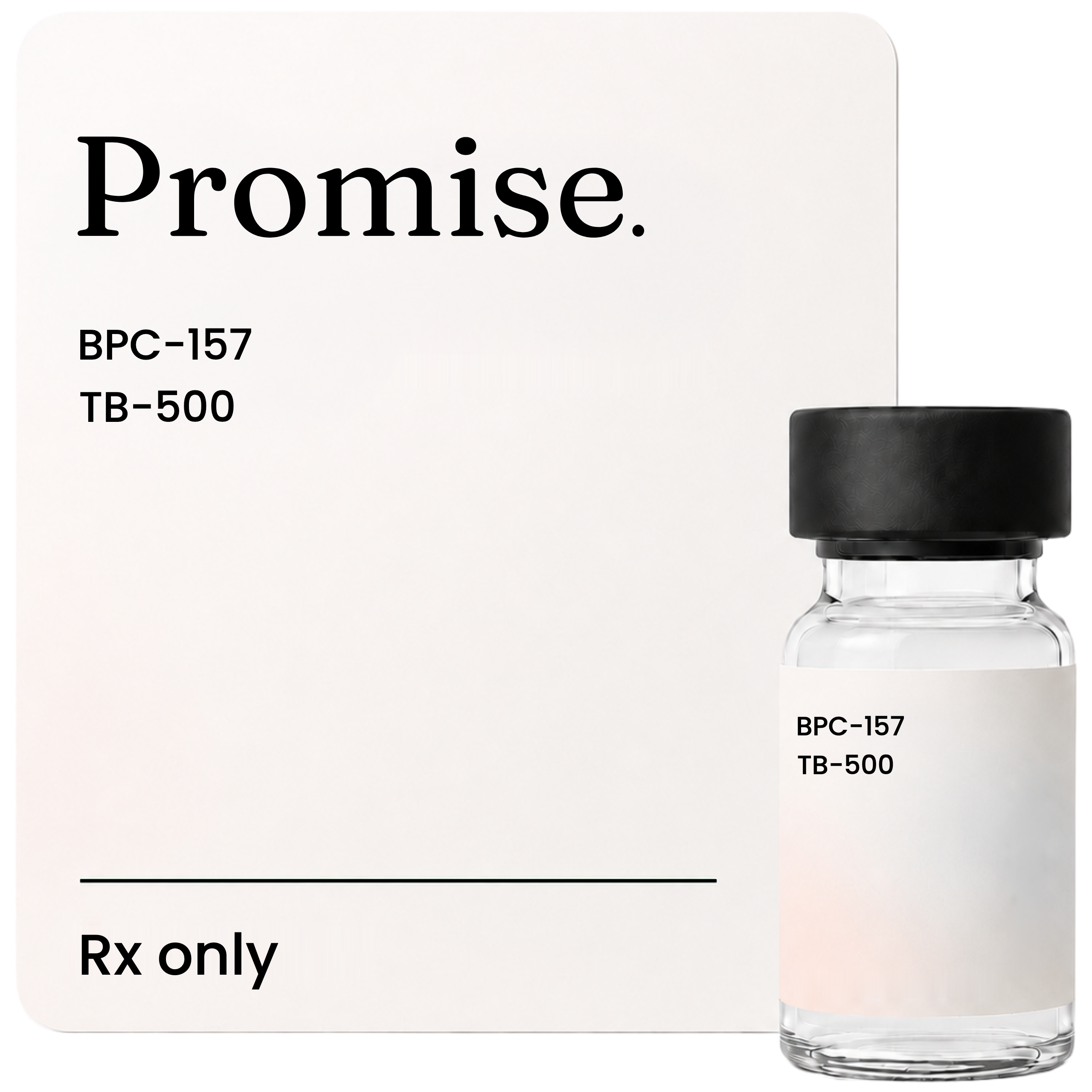
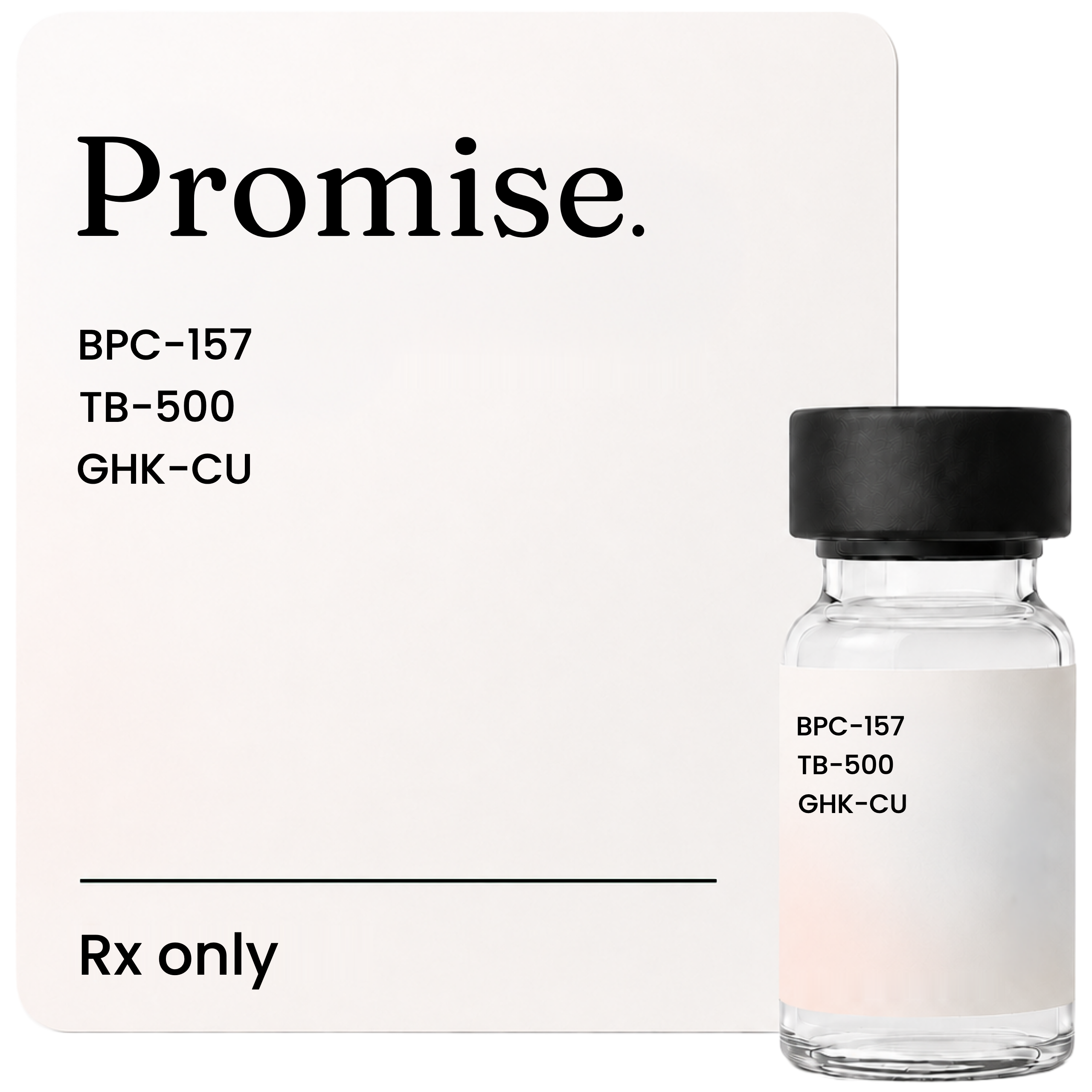
Wolverine pairs TB-500 with BPC-157, the most familiar combination in this space. KLOW is the wider formulation, combining four peptides. TB-500 on its own is the narrowest option of the three.

BPC-157 as a standalone treatment is listed under gut health and digestion, where its most distinctive research applies — it appears here only as a component of Wolverine and KLOW. Which of these a provider considers, if any, depends on your history and what you are recovering from, not on which sounds strongest.

Where the evidence stands

The research behind repair peptides is mostly preclinical: animal models and laboratory work, with human data that is limited and rarely large. None of these treatments is FDA-approved. Interest in the category has grown considerably faster than the clinical evidence has, which is a reason for a prescriber to be involved rather than a reason to hurry.

None of this replaces a diagnosis. A joint or tendon problem that is not resolving deserves an actual evaluation — imaging, an exam, a specialist — because a peptide prescribed against an unknown injury is a guess with a syringe attached.

What a visit involves

Each treatment has its own intake, a different clinical questionnaire per product, covering your health history, medications, and what you are trying to recover from. A licensed provider reviews it and either prescribes or declines; a cancer history, certain medications, and pregnancy are among the things that change the answer.

If you are prescribed, the medication is compounded and dispensed by a licensed U.S. pharmacy, and shipped with dosing instructions and follow-up from your care team. The fundamentals are still what keep the promise — training load, sleep, protein, patience — and treatment supports them rather than substituting for them.

Common questions

Do I need a prescription for TB-500, Wolverine, or KLOW?

Yes. All three are prescription-only. A licensed provider reviews every request and prescribes only when treatment is medically appropriate for you.

Is TB-500 FDA-approved?

No. TB-500 is not FDA-approved, and neither are the Wolverine or KLOW blends. All are compounded medications, prepared for an individual patient by a state-licensed U.S. pharmacy under a provider's prescription. Compounded medications are not reviewed by the FDA for safety, effectiveness, or quality.

What is the difference between Wolverine and KLOW?

Wolverine pairs BPC-157 with TB-500. KLOW combines four peptides — BPC-157, TB-500, KPV, and GHK-Cu — adding signals studied around inflammatory response and connective tissue. Your provider determines which formulation, if either, fits your situation.

Why is BPC-157 on its own listed under gut health?

Because that is where its most distinctive research sits — BPC-157 is modeled on a sequence found in a protective protein in human gastric juice, and GI-lining integrity is its most studied property. On this page it appears as a component of the Wolverine and KLOW blends.

Should I use a peptide for an injury that is not healing?

Get it diagnosed first. An injury that is not resolving needs an exam and often imaging, because treatment depends on what is actually damaged.

Explore other solutions

Anti-Aging & Longevity

Compounded peptides studied in anti-aging and longevity research, offered the honest way: a licensed provider reviews your history and prescribes only when it is appropriate for you.

Explore Anti-Aging & Longevity →

Brain Health & Memory

Two brain-health peptides with an unusual research history, offered by prescription and described honestly — a licensed provider reviews every request.

Explore Brain Health & Memory →

Calming & Stress Relief

Calming & stress relief is a category of one: a compounded peptide studied around slow-wave sleep architecture and stress-hormone signaling. The human evidence is limited, and a licensed provider reviews every request.

Explore Calming & Stress Relief →

Energy & Focus

Energy & focus approached at the level of mitochondrial energy production rather than stimulation — treatments prescribed only when a licensed provider determines they are appropriate for you.

Explore Energy & Focus →

Gut Health & Digestion

A compounded peptide studied for the signaling behind gut health — gastrointestinal lining integrity — prescribed only when a licensed provider determines it is appropriate for you.

Explore Gut Health & Digestion →

Hormone & Organ Health

Hormone & organ health starts upstream: peptides studied for their effect on the body's own growth hormone release, rather than supplying growth hormone itself. A licensed provider evaluates every request.

Explore Hormone & Organ Health →

Immune Support

Immune support here means one compounded peptide, studied around T-cell maturation and immune signaling. A licensed provider reviews every request.

Explore Immune Support →

Metabolic Support & Fat Loss

Incretin medications studied for fat loss and metabolic support, which a licensed provider may consider alongside nutrition, movement, and sleep. Every request is reviewed by a clinician.

Explore Metabolic Support & Fat Loss →

Mood & Libido

Two compounded peptides studied for the central and upstream signaling behind mood & libido, rather than peripheral blood flow. A licensed provider reviews every request.

Explore Mood & Libido →