Hormone & Organ Health · Coming soon

IGF-1 LR3, explained before it's offered.

LR3 is a modified form of a growth signal the body makes. Its direct evidence comes from cells and animals; no published human trial of LR3 itself was found. It's coming soon to Promise.

Coming soon

You are on the list. We will email you when IGF-1 LR3 becomes available — and nothing else. Joining is not a medical request, and no prescription has been issued.

That did not go through. Check the address and try again.

IGF-1 LR3 is coming soon to Promise. Add your email and we'll let you know when visits open.

We store your address and which treatment you asked about, and use it only to tell you if IGF-1 LR3 becomes available. Joining is not a medical request and no prescription is issued from this form.

A licensed provider reviews every request; not everyone qualifies.

Prefer to talk to a person first?

Call (602) 737-2202

Open now · until 5 p.m. AZ

A licensed clinician in a consultation room

How it works once IGF-1 LR3 is available

  1. 1

    Share your health history

    Every treatment gets its own online clinical questionnaire — your history, medications, and goals.

  2. 2

    A licensed provider reads it

    A real person goes through your history and takes the time to get it right before anything is decided.

  3. 3

    They prescribe — or they don't

    If a treatment isn't right for your history, you'll hear that plainly. That review is the whole point.

  4. 4

    Your pharmacy compounds it

    Made for your prescription by a licensed U.S. pharmacy and shipped in temperature-safe packaging.

  5. 5

    You choose whether to continue

    Your care team checks in after it arrives. Adjust with your provider, or cancel at any time.

The safe way to take IGF-1 LR3 seriously

IGF-1 LR3 is easy to find online and hard to trust there. Promise works the way medicine is supposed to work — a clinician decides, a licensed pharmacy fills, and someone stays accountable to you.

A real prescription

Prescribed for you specifically, after a real look at your health history — never pulled off a shelf.

A real pharmacy

Your prescription is compounded for you by a licensed U.S. pharmacy — not a mystery vial from an unregulated website.

Real oversight

Temperature-safe shipping, follow-up check-ins, and a care team that answers — before and after your medication arrives.

Product details
Availability
Coming soon — add me to the list to be notified

A direct growth signal

LR3 is studied as a modified growth signal that binds less readily to IGF-1 binding proteins. Its direct action differs from prompting growth-hormone release.

Cells and animals first

The direct evidence comes from cell cultures and animal studies. No published human trial of LR3 itself was identified; that leaves human outcomes and safety unresolved.

A provider will decide

When visits open, a licensed provider will weigh the early evidence alongside your health history, including blood sugar and cancer history, before deciding whether a prescription is appropriate.

In brief.

IGF-1 LR3 is a changed version of IGF-1, a growth signal the body makes. Researchers have studied it in cells and animals, including work on muscle cells. We found no published human trial of LR3 itself.

IGF-1 LR3 is coming soon to Promise — add me to the list.

What IGF-1 LR3 is

IGF-1 stands for insulin-like growth factor one. Growth hormone prompts the liver and other tissues to make this signal, which acts on cells involved in growth and metabolism. LR3 is an analog, meaning a modified version of that natural molecule.

The changes explain the name. “Long” refers to an added chain of thirteen amino acids, the building blocks of proteins. “R3” refers to replacing one building block with arginine at the third position. The result has eighty-three amino acids. Long R3 IGF-1 and IGF1 LR3 are other names for it.

How the modified signal is studied

The original development work made LR3 as a laboratory tool for studying IGF-1 action in cell cultures. That research setting matters when reading claims about it.

Natural IGF-1 travels attached to binding proteins, which help control how much of the signal reaches cells. LR3 binds less readily to these proteins. Researchers use that difference to examine growth signaling without the same degree of interference from them.

A foundational laboratory paper from 1992 compared the modified molecules in rat muscle cells and other cell cultures. The researchers measured protein production, DNA production and protein breakdown. Responses depended on the cell system and its binding proteins. This was laboratory work on isolated cells, rather than a trial of muscle growth in people.

What the evidence shows — and what it doesn't

The direct evidence remains laboratory and animal research. Our searches of published papers and the U.S. trial registry did not identify a human trial of LR3 itself. Studies of other IGF-1 medicines cannot fill that gap: changing the molecule changes what needs to be tested.

Animal results also complicate the simple idea that a growth signal always means more growth. In a 1997 study in pigs, researchers reported lower weight gain, food intake and circulating growth hormone with LR3. The paper described a contrast with growth findings in rats. These findings show why a result in one species cannot establish what happens in another.

That hormone finding matters for the mechanism too. Supplying an IGF-1 analog directly bypasses the step where the pituitary releases growth hormone. It does not mean hormone feedback disappears. The pig study measured changes in the body's own hormones alongside the supplied signal.

How LR3 differs from growth hormone peptides

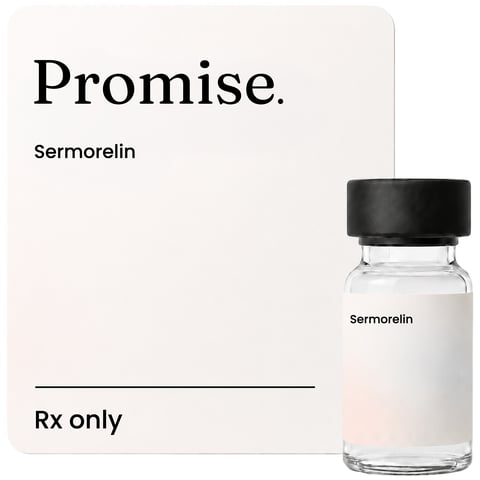
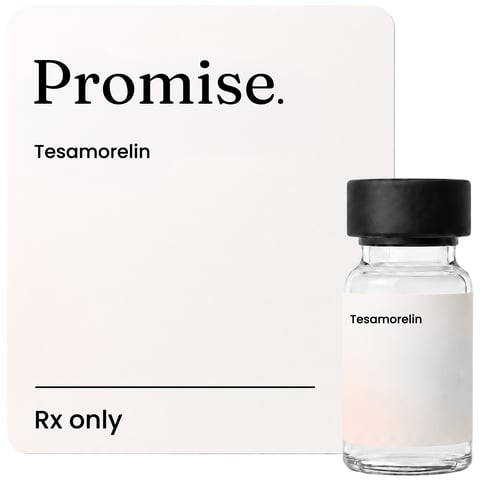
Sermorelin and tesamorelin resemble a signal that prompts the pituitary, a small gland beneath the brain, to release growth hormone. That hormone then prompts IGF-1 production. MK-677 also works through growth-hormone release.

LR3 enters the pathway at a different point. It supplies a modified IGF-1 signal directly instead of asking the gland to release growth hormone first. It is a different approach within hormone and organ health, with a different evidence gap.

Its listing under Muscle & Recovery reflects research interest in growth signaling. It does not establish that it helps people gain muscle or recover from an injury. The category describes a research area, not an expected result.

Why mecasermin's approval doesn't extend to LR3

LR3 is different from mecasermin, the FDA-approved IGF-1 medicine called Increlex. Mecasermin has an indication for growth failure in children with severe primary IGF-1 deficiency, a condition involving very low IGF-1. LR3 is a different, modified molecule; that approval does not extend to it.

Mecasermin has insulin-like effects on blood sugar. The Increlex label warns that severe hypoglycemia, or very low blood sugar, has led to seizures. Mecasermin is contraindicated in children with cancer or a history of cancer, meaning it must not be used in that group. These are mecasermin label facts. LR3 acts on the same signaling system, but its own human risk profile has not been established.

When LR3 becomes available through Promise, it will be dispensed as a compounded medication, which is different from an FDA-approved product. The formulation Promise will offer is not FDA-approved. Compounded medications are not reviewed by the FDA for safety, effectiveness, or quality.

A licensed provider may still prescribe — that decision is between you and your doctor.

How it will be prescribed

When visits open, the process will begin with an intake questionnaire written for this compound. It will cover your health history, current medicines and the reason for your request. Blood sugar and cancer history will be part of the review; the provider may request lab information before deciding.

A licensed provider will read your answers and decide whether to prescribe.

If the provider determines LR3 is appropriate, a licensed U.S. pharmacy will compound and dispense the prescription. Your provider sets any protocol; Promise does not publish dosing. Follow-up check-ins from your care team will keep the plan under review. Joining the list means an email when visits open; it does not begin a visit or a prescription today.

Common questions

What is IGF-1 LR3?

It is a modified form of insulin-like growth factor one, a growth signal the body makes. Researchers changed its structure so it binds less readily to the proteins that normally bind IGF-1. It is studied in cells and animals, including muscle-cell research; no published human trial of LR3 itself was found.

Will IGF-1 LR3 from Promise be a real prescription?

Yes. When visits open, IGF-1 LR3 will be prescribed by a licensed provider after a review of your health history and compounded for you by a licensed U.S. pharmacy. It will not be a product labeled for laboratory use. A prescription will depend on the provider determining it is appropriate for you.

Does starting a visit guarantee a prescription?

No. When visits open, a licensed provider will review your health history, medicines and reason for requesting LR3. They may ask for more information, decide that a different approach fits better, or decline. Joining the waitlist only means an email when visits open.

Is IGF-1 LR3 FDA-approved?

No. An FDA-approved IGF-1 medicine exists — mecasermin, for growth failure in children with severe primary IGF-1 deficiency. LR3 is a different, modified molecule, and that approval does not extend to it. The formulation Promise will offer is not FDA-approved. It will be compounded and is not reviewed by the FDA for safety, effectiveness, or quality.

Is IGF-1 LR3 available now?

Not yet. IGF-1 LR3 is coming soon to Promise — add me to the list on this page and we'll email you when visits open. Joining the list does not start a medical evaluation. Any later prescription will depend on a licensed provider's review of your history.

How is IGF-1 LR3 different from growth hormone peptides like sermorelin?

It supplies a modified IGF-1 signal directly. Sermorelin instead prompts the pituitary, a small gland beneath the brain, to release growth hormone, which then prompts IGF-1 production. LR3 bypasses that release step, but it can still affect hormone feedback. The two mechanisms and their research records are different. Human outcomes for LR3 itself have not been established.

What does the research on LR3 actually show?

The direct research is in cell cultures and animals. A foundational study examined protein production and breakdown in rat muscle cells; a pig study found lower weight gain and altered hormone levels. Those are laboratory and animal findings. No published human trial of LR3 itself was identified, so they do not establish a clinical benefit or a human safety profile.

How is this different from IGF-1 LR3 sold online?

Products sold as LR3 without a prescription may be labeled for laboratory use and lack a licensed provider or patient-specific pharmacy dispensing. When visits open through Promise, a licensed provider will decide whether a prescription is appropriate, a licensed U.S. pharmacy will compound and dispense it, and a care team will follow up. Those steps do not resolve the missing human evidence.

Related treatments

Other options in Hormone & Organ Health and Muscle & Recovery a provider may consider.